

When you live in East Texas, including Wake Village, you’ll often deal with storm damage to your trees. This is thanks to the area’s unique combination of high winds, severe thunderstorms, and saturated soil that increase the risk of uprooting and breakage.
In this post, we’ll explain how to identify storm damage on trees and when to contact us at Hawkins Tree and Landscaping for professional tree services in Wake Village, TX. Keep reading to learn how to examine trees for storm damage and take action before one falls and causes problems that will cost you a fortune to fix.
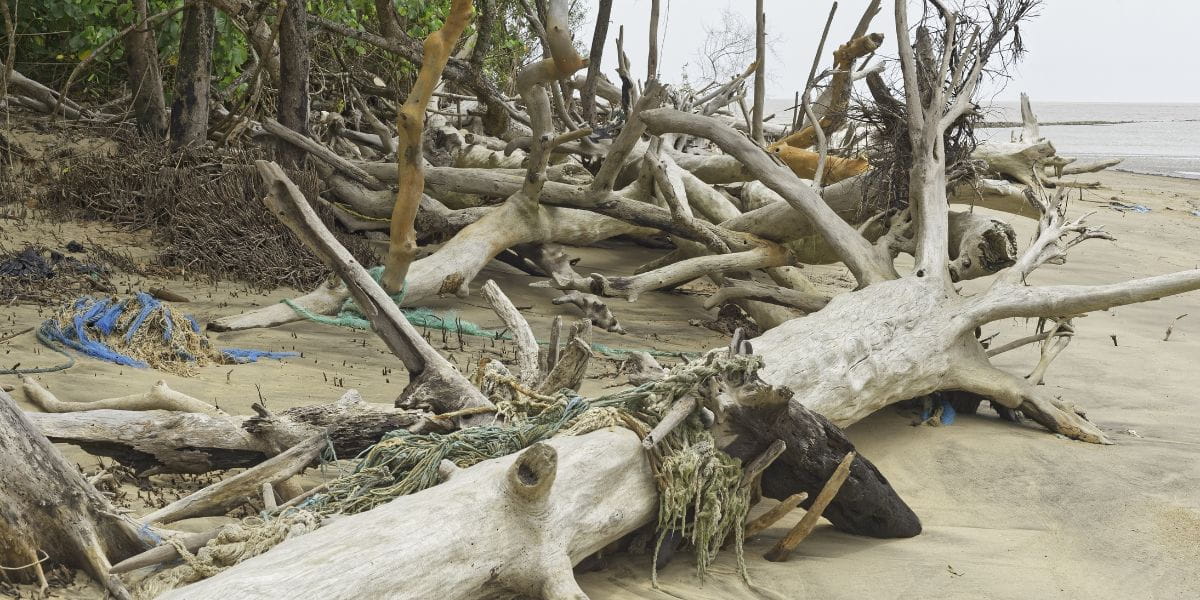
Snapped Branches
The first signs of damage you’ll often notice after a heavy storm are hanging branches. Weak and dead branches are the most susceptible, and they pose immediate safety risks to life and property.
After severe weather, you should assess your trees’ canopies and check for broken branches or partially torn limbs. You certainly don’t want these branches to drop and injure anyone or damage your structures, making it crucial to address them promptly.
It’s worth noting that regular pruning can help minimize the risk of your tree branches breaking during a storm. This preventative maintenance routine allows you to remove diseased, dead, or weak limbs that may fall during heavy winds.
Storm-damage tree care specialists like Hawkins Tree and Landscaping can help you identify narrow-branch angles that often lead to frail joints that break easily.
Trunk Damage
After a storm, carefully inspect the trunk of each tree in your yard, from the base up to the first primary branches, to see if there are:
- Fresh openings
- Long vertical splits
- Separated bark
Because the trunk is your tree’s primary support system or backbone, the severity of damage will often determine whether it will survive.
Your Tree Is Slanting More Than Usual
Suppose you notice that your previously straight or slightly slanting tree now has a significant lean after the storm. In that case, take the time to inspect the base of the tree for upturned soil or fresh visible roots.
Such problems indicate structural failure, meaning that the tree is potentially unstable and could fall without warning. Call a tree care service for a professional assessment to determine if complete removal is necessary.
Your Tree Is Partially Uprooted
A heavy storm can cause the soil around your tree to become saturated with water. This makes the soil too weak to hold the roots firmly, and your tree will eventually tip in strong winds.
Below are common indicators of storm-damaged trees in these situations:
- Soil heaving on one side of your tree
- Cracked earth around the base
- Visible roots
Avoid walking near a partially uprooted tree, as it can suddenly collapse. Call a professional for emergency tree removal.
Bear in mind that not all signs of storm damage on trees are immediately noticeable. If any of your trees have previously suffered damage from a storm, pest infestation, or construction accident, you’ll want to give them special attention after a storm. That’s because storms tend to capitalize on trees’ weak points.
Also, if trees in your neighborhood exhibit moderate to severe storm damage, consider calling a professional to assess your trees for potential issues.
Call for Professional Help After Storm in Wake Village, TX
Now that you understand how to identify storm damage on trees, you can call Hawkins Tree and Landscaping for guidance on the next course of action. Call us at (870) 330-9912 for a free estimate, or check our blog for more tips for spotting storm damage in trees and handling fallen trees after a storm in Wake Village, TX.